If you have studied retinoids, chances are that you have encountered tretinoin 0.1% cream. Tretinoin 0.1% cream is referred to as the “gold standard” retinoid cream, but on the other hand, it is one of the scariest creams for beginners. This cream is potent, backed up by several decades of dermatological studies, and really can change your skin. However, it can cause redness, flakiness, and irritation if you don’t approach it with a full understanding of how it works.
This tutorial gives you all the information that a beginner should know about tretinoin 0.1% cream.
What Is Tretinoin 0.1% Cream?
Tretinoin is a type of retinoid, or vitamin A derivative, that has been in use as a medicine in dermatological treatment for the past few decades as an effective treatment for acne, photo damage, and other manifestations of aging. Tretinoin cream is also called all-trans-retinoic acid and is available under different brand names.
The tretinoin cream can be bought in three forms – 0.025%, 0.05%, and 0.1%. Tretinoin 0.1% cream is the strongest form of tretinoin available, which means that this form contains the largest amount of the active substance and works faster but with a larger chance of irritation at the beginning of use.
Since tretinoin cream is a potent medicine with its special mechanism of action, it is considered prescription only medicine in most of the countries, including the United States. Therefore, you should consult a dermatologist before you start your treatment.
How Does Tretinoin 0.1% Work?
Tretinoin mainly exerts its benefits through accelerating skin cell turnover, meaning how quickly your skin renews itself by shedding old skin cells and producing new ones. It has multiple effects, including:
- Reducing comedogenesis – it reduces the occurrence of clogged pores, responsible for blackheads and whiteheads, making it a main ingredient in acne medication.
- Stimulating collagen production – it was proven that tretinoin increases the production of collagen, which is responsible for reducing the appearance of fine lines and wrinkles.
- Improving skin tone and texture – through promoting skin cell turnover, tretinoin helps lighten the skin color due to hyperpigmentation, smooths irregularities, and evens out the tone.
- Preventing photodamage – scientific evidence dating from the late 1980s proves the positive effect of daily application of 0.1% tretinoin on sun-damaged skin over several months.
What should be noted about tretinoin, though, is that it does not produce rapid results. It takes weeks or even months of regular use to see an improvement due to natural skin cell turnover.
Who Should Consider Tretinoin 0.1%?
Tretinoin 0.1% is usually prescribed to individuals who:
- Suffer from moderate to persistent acne, which has proven to be resistant to less potent forms of retinoids and non-prescription treatment methods.
- Have visible signs of photoaging such as fine lines, rough skin texture, or uneven skin tone.
- Have developed resistance to less concentrated forms of tretinoin 0.025%, 0.05% and wish to achieve better results.
- Seek long-term solution to the problem of aging and renewal of skin cells under the supervision of a dermatologist.
Usually, it should not be the first choice for complete beginners to retinoids. Usually, most doctors prefer to introduce patients to the use of tretinoin with smaller amounts first, before increasing it to 0.1%.
Who Should Avoid It?
Tretinoin is not suitable for all. It should be avoided, or its alternative should be discussed with your doctor if you are:
- Pregnant, plan to get pregnant, or are breastfeeding – tretinoin is a teratogenic drug and poses a risk to your unborn child, so it is important to practice contraception while on it
- Affected with eczema or any other skin condition that makes your skin dry, irritated, or extremely sensitive, tretinoin may cause intense irritation in such conditions.
- Sensitized or allergic to tretinoin itself or any of its components (Atralin, for instance, contains fish collagen, which is important for patients who are sensitive to fish products)
- Using any other potent active agent (benzoyl peroxide, potent exfoliating acids, or other retinoids) without consulting your doctor, the combination of these potent agents increases irritation dramatically.
That is precisely the reason why tretinoin is a prescription-only drug.
How to Use Tretinoin 0.1% Cream Correctly
Getting the application right matters just as much as the product itself. Here’s a step-by-step approach recommended by dermatologists:
1. Cleanse and Dry Completely
Clean your face with a non-stripping cleanser and make sure to pat your face dry completely. Application of tretinoin on wet skin leads to increased absorption and irritation; dermatologists advise waiting 20 to 30 minutes after cleansing before application.
2. Use a Pea-Sized Amount
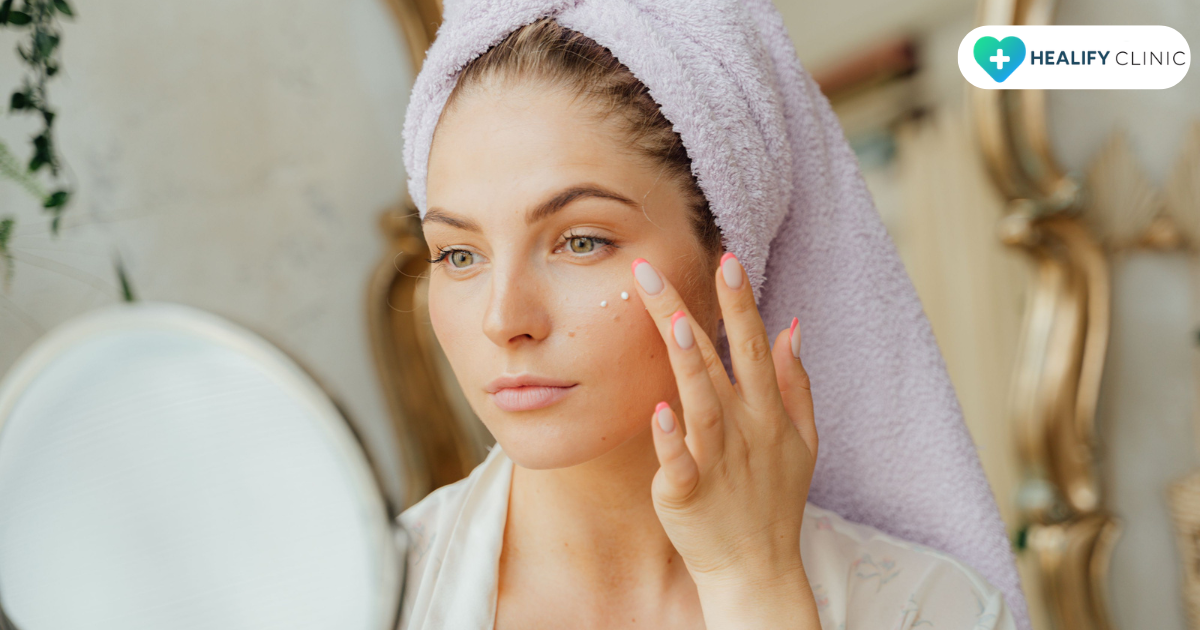
Less is definitely more when it comes to retinoid use. Usually, doctors recommend application of half an inch or a smaller amount of cream, which equals approximately a pea-sized dose for your whole face. Using extra amounts will not help you to achieve results faster but will irritate.
3. Apply in a Thin, Even Layer
Apply the product on your forehead, cheeks, chin, and nose, and spread evenly in a thin layer. Avoid your eyes, nasolabial folds, lips, and any damaged areas of the skin.
4. Start Slow
When using tretinoin 0.1% for the first time, avoid using it nightly from the start. Most dermatologists advise applying it two or three days a week initially and then slowly increasing usage frequency until you develop a tolerance – this is referred to as “retinization.”
5. Apply at Night
Tretinoin degrades under exposure to light and causes increased photosensitivity, which is why it needs to be used in the evening, preferably before bedtime.
6. Moisturize
Using a non-fragranced moisturizer both before and after the application of tretinoin (or even applying a moisturizer before and after tretinoin application, “the sandwich method”) may help reduce side effects.
7. Give It Time
Be patient about the outcome. It usually takes 8 to 12 weeks for a person to show any significant change, and there may be an initial period of purging and irritation before this happens.
What to Expect: The “Purging” Phase
One of the most common shocks that beginners experience is the fact that skin conditions will worsen before they get better. This phenomenon is often referred to as “the tretinoin purge.” Since tretinoin speeds up the process of cell regeneration, it is likely to flush out any congestion underneath the skin, causing more breakouts, redness, peeling, and sensitivity in the first few weeks.
It is an expected phase for many people using the medication, and not necessarily an indication that it is not working well or is not suitable for you. However, if you experience excessive irritation and pain, you should seek professional advice from the prescribing dermatologist.
Common Side Effects
Because tretinoin 0.1% is a high-strength formulation, side effects are more common than with lower concentrations, especially in the first several weeks.
hese typically include:
- Redness and warmth
- Peeling, flaking, or dryness
- Stinging or burning sensation
- Mild itching
- Temporary worsening of acne (purging)
- Increased sun sensitivity
These types of reactions are usually part of the adjustment period of the skin and should fade away once the skin becomes more tolerant to it. If you do get any allergic reaction, such as swelling, rashes, or intense burning sensations, wash off the affected area and contact your provider right away.
Building a Tretinoin-Friendly Skincare Routine
How you build your routine around tretinoin matters just as much as the product itself. Keep these principles in mind:
Simplify your routine
It is also important that you do not use multiple active ingredients at once while the tretinoin works to get your skin adjusted, because it increases the chances of causing skin irritations.
Use gentle, non-stripping cleansers
Medicated, exfoliating, or highly perfumed cleansers or soaps should be avoided to prevent the skin from further drying and sensitizing.
Moisturize generously
Applying a moisturizer is not a choice but an absolute must when using tretinoin to maintain your skin barrier.
Sunscreen is non-negotiable
The use of sunscreen becomes even more important for the skin under the use of tretinoin. Your skin becomes prone to harmful UV radiation. Therefore, a broad-spectrum SPF 30+ sunscreen is a must every day.
Avoid harsh physical exfoliation
Do not scrub or use exfoliating brushes, and avoid peeling off dead skin cells, as it will only irritate your skin and impede the adjustment process.
Be patient with the timeline
The positive changes in skin condition, such as acne reduction, texture improvement, and fine lines, will be noticeable after 8-12 weeks.
Tretinoin 0.1% vs. Lower Strengths
To help determine whether 0.1% is a suitable choice compared to 0.025% and 0.05%, you could consider that:
- 0.025% and 0.05% are frequently prescribed as initial doses, especially when dealing with sensitive skin or for those who have never used retinoids before.
- 0.1% contains a higher amount of active component, which means better and quicker results for conditions like acne, skin texture, and photoaging, but also increases the likelihood of irritations, especially at the beginning of the treatment.
A common dermatological practice suggests a “start low, go slow” strategy – beginning with a low dose and increasing the dosage to 0.1% when the skin gets adjusted. In some cases, 0.1% is prescribed right away according to the condition of the skin and experience with retinoids. The best course of action would be to consult your dermatologist.
Final Thoughts
Retinoid cream with 0.1% tretinoin content has established itself as one of the best-studied and effective cosmetics in the field of dermatology that can solve such problems as acne, photodamage, and skin renewal; however, thanks to its high efficiency, it requires adequate respect and patience. The gradual application, frequent moisturization, protection from the sun rays, and adaptation of the skin are the key elements of using the product.
First of all, it is important to use retinoids only in consultation with a dermatologist who will evaluate your skin and treat possible irritation by changing the frequency of the application. In such a way, tretinoin 0.1% cream may be one of the best products for cosmetic procedures.
Frequently Asked Questions
Can I buy tretinoin 0.1% cream over the counter?
No. In most nations, including the U.S., tretinoin is a prescription drug and needs to be evaluated by a qualified medical professional.
How long until I see results?
The majority of people begin to notice changes in their acne in 8 to 12 weeks, whereas changes to fine lines, texture, and photodamaged skin usually require several months of consistent application.
Can I use tretinoin with other actives like vitamin C or niacinamide?
Some may be applied safely, but using tretinoin in combination with exfoliants, benzoyl peroxide, or other retinoids could lead to too much irritation.
Is purging different from breaking out?
Purging is usually temporary (up to a few weeks) and will happen in places where you normally have breakouts because tretinoin makes it easier for these congestions to come out. If you develop breakouts beyond this timeframe, you might consider consulting your healthcare provider about it.
Do I need to stop using tretinoin before sun exposure or vacations?
Not necessarily, but tretinoin makes your skin highly sensitive to sunlight, and thus, you need more protection from it. You can decide to discontinue or lessen the use of tretinoin in times of high exposure to the sun.